
Perpetual
1 opportunity
Australia
1001-5,000 employees
Zak Bettman
Graduate - Perpetual Corporate Trust
Bachelor of Laws and Bachelor of Mathematical Sciences
How has the graduate program supported your learning and development?
The graduate program has strongly supported my learning and development by placing me in a team that plays an instrumental role within the business. This has given me exposure to a wide range of transactions and processes, allowing me to build both technical knowledge and a broader understanding of the financial services industry. I have also had the opportunity to work closely with clients and internal stakeholders, which has helped develop my communication and relationship management skills. In addition, beginning my career alongside a cohort of graduates from diverse backgrounds has created a collaborative and supportive environment, where we can share experiences and learn from one another. Overall, the program has provided an excellent foundation early in my career.
What kind of training, mentoring or support have you received?
I have received a high level of support, mentoring and training from my team since joining. From the outset, team members took the time to guide me through key processes and explain how different aspects of the business operate. This approach allowed me to quickly build confidence in my role and take on more responsibility. I have also found that colleagues are always willing to answer questions and provide context, which has been invaluable in reinforcing my understanding. The ongoing feedback and openness within the team have created a supportive learning environment, making it easy to seek clarification when needed and continuously improve.
Can you share an example of something new you’ve learned or achieved?
One of the key things I’ve achieved so far is stepping out of my comfort zone by taking on responsibility earlier than I initially expected. This has involved managing aspects of onboarding processes, liaising with internal and external stakeholders, and ensuring key tasks are completed accurately and on time. Through this experience, I have developed greater confidence in my ability to handle complex tasks and prioritise effectively. I have also improved my attention to detail and demonstrated accountability, particularly when working across multiple internal systems and stakeholders. This early exposure to responsibility has been a significant learning curve and has helped accelerate my career development.
How approachable are leaders and senior team members?
Leaders and senior team members at Perpetual Corporate Trust are highly approachable, which has made a noticeable difference to my experience as a graduate. There is a strong culture of support and investment in early career development, and this is reflected in how willing senior staff are to engage, answer questions and provide guidance. I have felt comfortable reaching out to both my direct team and more senior staff when needed, and conversations are always constructive and informative. This openness not only helps with daily tasks and solving problems but also encourages learning and professional growth. It creates an environment where graduates feel valued and supported from the outset.
How would you describe the team culture?
The culture within my team is phenomenal. Team members are supportive, approachable and willing to help each other, which makes a big difference in a dynamic environment. There is a strong sense of accountability, but it is balanced by flexibility based on workloads. Communication within the team is open and transparent, which helps ensure everyone is aligned and able to contribute effectively. At the same time, there is a friendly and inclusive atmosphere that makes coming to work enjoyable. The team culture significantly aided me in settling into full time work, allowing me to develop confidence.
What does work-life balance look like in your role?
Work-life balance at Perpetual Corporate Trust has been excellent. My team places a genuine emphasis on maintaining sustainable workloads and avoiding unnecessary pressure, which has made it easier to manage both professional and personal commitments. There is flexibility when needed, and team members are understanding and supportive, particularly during busier periods. This approach has helped create a healthy working environment where productivity is prioritised without compromising wellbeing. As a result, I’ve been able to stay engaged and focused in my role while still maintaining balance outside of work. This has been an important aspect of my overall experience in the graduate program.
What makes this organisation a great place to start your career?
Perpetual Corporate Trust is a great place to start your career due to the level of responsibility and support provided early on. As a market leader in its field, the business offers graduates the opportunity to take on meaningful work and gain insight into a wide range of financial products and clients. The organisation also fosters a strong learning culture, where asking questions and seeking development opportunities is encouraged. In addition, the supportive team environment and accessibility of senior staff make it easier to develop both technical and professional skills. Perpetual Corporate Trust provides a solid platform for career development in the financial services industry.
Eliza O'Connell
Graduate - Perpetual Corporate Trust
Bachelor of Business
What did you study at university, and how did you end up in your current role?
I studied a Bachelor of Business at UTS majoring in Marketing and Finance. I’ve always enjoyed strategic and commercial analysis and I worked in marketing both during University, and for my first year post-graduation. Over time I realised wanted to move into financial services to use the finance skills I’d developed at University, so that’s what led me to applying for the program at Perpetual.
I’m now working in the FP&A team which has been a great fit for what I love to do most which is combining working with numbers with strategic analysis.
What attracted you to apply for this graduate program?
This graduate program stood out to me as Perpetual is such a longstanding and well-regarded company. It felt like a great place to be as someone starting out their career. The rotational aspect of the program was also something that appealed to me as it’s such a valuable opportunity to get experience across different areas and develop more skills as a graduate starting out their career.
What does your current role involve at a high level?
Working with the FP&A team largely involves being part of planning and forecasting processes, helping to analyse performance against forecasts, and providing financial analysis that helps to inform decisions.
What skills do you use most in your day-to-day work?
Day-to-day I’m using a combination of analysis as well as communication skills. As part of the Finance team, we obviously work a lot with numbers and data, but a lot of the focus is on interpreting that information and translating it into clear insights. We regularly collaborate with teams across the business to gather context and better understand the drivers behind the data.
Once we have everything we need from a data and inputs perspective we’ll work on conveying this information in a way that’s meaningful for stakeholders. This often involves putting together slide decks that highlight key insights and help inform decisions.
What do you enjoy most about your role?
I enjoy most that my role gives a broad perspective across different areas of the business. I’ve been able to build a wider commercial understanding of Perpetual Corporate Trust, which has been so valuable as a graduate. I’ve also really appreciated being involved in planning and strategy meetings, where I’ve been able to observe and learn from discussions and decisions at a leadership level.
Additionally, my team itself has been such a great team to be a part of. There’s so much variety in what we work on as different tasks come up ad hoc, which keeps every day interesting. The team is very supportive and extremely knowledgeable, so I have been able to learn a lot and get involved in a wide range of projects.
What’s something people might not expect about your job?
Something that may be unexpected is how much of the job is about collaboration. As we’re in a business partnering role, we work across many different teams and get involved in a wide range of tasks, so no two days is really the same.
How has the program supported your transition from uni to full-time work?
To be fair, I was already working full-time last year so I had a bit of an advantage of being used to a full-time work schedule. But I’ve still found that Perpetual has been such a supportive workplace to join and there’s so many people across the business that are willing to share their knowledge and help with the transition and starting a new role. I’ve also found that there’s a good emphasis around flexibility, so I’ve still been able to balance commitments and the things that I love to do outside of work, which has helped make the transition easy.
Garcia Yuen
Graduate - Perpetual Corporate Trust
Bachelor of Commerce
What factors were most important to you when choosing a graduate program?
Personally, I have always taken a career-centric approach to my graduate program selection. What I mean by that is, as opposed to choosing a role that sounds like it could be interesting and seeing where it takes me, I tend to prioritise opportunities that clearly align with my broader career aspirations and areas of interest. This means I approach the decision more strategically, considering how each role may contribute to my long-term professional development. Career progression is a key factor in this process – I place a strong emphasis on whether a role aligns with, or can help position me for, my desired industry or function, as well as how achievable that progression is within a reasonable timeframe. This involves assessing the skills I would develop, the exposure I would gain, and how relevant these would be to my future career path. Fortunately for me, Perpetual Corporate Trust closely aligns with my aspirations and interests, so the decision was made a lot simpler for me. However, that said, I recognise that this approach is primarily a starting point for identifying a role with the greatest likelihood of being suited towards me at this current stage. Graduate programs often provide broad exposure across different areas, and there is always the possibility that my interests or career goals may evolve as I gain more insight into the organisation and its operations. Finally, while I rely on these structured considerations, I have found that my decision-making process often comes down to intuition. I tend to trust my “gut feeling” – if I feel that I would regret not choosing a particular program, that is often a strong indicator that it is the right fit for me.
What stood out to you about this program compared to others?
I’ve always held a strong interest in finance, having completed a Bachelor of Commerce with a major in Finance at university. In addition to Perpetual’s well-established institutional reputation and quality, I was particularly drawn to the Debt Market Services and Managed Funds Services business units within Perpetual Corporate Trust. These areas aligned closely with my academic interests, particularly around how funds are managed and monitored in practice, as well as the more technical aspects of the industry, such as the calculation of distributions and the pricing of coupon payments. During my studies, I developed a preference for these more quantitative and analytical components, which further reinforced my interest in gaining practical exposure in these areas. The structure of the program, comprising two six-month rotations, also stood out to me. I believe that this is an adequate time to build a meaningful and well-rounded understanding of each team and its core functions, beyond a surface-level overview. At the same time, the rotational design provides flexibility to experience different areas of the business, enabling a more informed decision when narrowing down where your specific interests lie.
What advice would you give someone deciding between different graduate opportunities?
My biggest piece of advice would be to make sure you do your research on both the company and the program in advance – the more informed you are, the better equipped you will be to make a well-considered decision. In my own experience, this involved reviewing a wide range of resources, including the company’s official website, online forums, and even reaching out to individuals who currently work, or have previously worked, at the organisation, even if I didn’t previously know them. This helped provide dependable, first-hand perspectives that are often not available through formal channels. Developing an understanding of the role, business, and its operating environment allows you to more accurately assess how well the opportunity aligns with the key factors outlined in my response to the first question, such as career progression, learning opportunities, and overall fit. I also found it helpful to discuss my considerations with friends and peers who are working in the same or related industries. These conversations often provided a more balanced and objective perspective, helping to challenge my assumptions and highlight considerations I may not have initially recognised.
What should candidates look for when researching a program?
As I previously alluded to, some key areas to focus on when researching a graduate program include the different business functions, the structure of the program – particularly how rotations are organised and how permanent placements are determined – and the overall company culture. In your research, you should aim to gain an understanding of the key day-to-day responsibilities and learning outcomes associated with the role. This enables you to form a more concrete and practical assessment of whether the program aligns with your interests and strengths. If this level of detail is not publicly available, proactively reaching out to recruitment representatives or relevant team members for clarification can be very helpful. Another valuable source of insight is the experience and feedback of previous graduates. People who have completed the program are often well-positioned to provide practical, first-hand insights, having considered many of the same factors as you during their own decision-making process. Finally, in addition to understanding the rotational structure itself, it also important to research or seek clarification on how post-rotation placements are determined. This aspect can play a significant role in assessing whether the program is likely to lead to a role that is well-aligned with your preferences and career objectives.
How can candidates tell if a company’s culture is right for them?
Beyond reaching out to people who have had experience in the organisation, it can be somewhat challenging to accurately assess the culture of an organisation prior to joining. However, in my experience, cultural considerations began to take shape during the recruitment process itself. My hiring process differed slightly from that of the other graduates, as I commenced the program later due to specific circumstances. However, the responsiveness and willingness of the recruitment representative to accommodate my situation left a strong initial impression. The flexibility and support in navigating these circumstances provided an early indication of the inclusive and supportive culture here at Perpetual. Additionally, shortly before my start date, my manager reached out to welcome me and provide a brief introduction. This proactive engagement confirmed my perception of a friendly and approachable working environment. Since joining, I have found that everyone I have spoken to in my team, and the broader Perpetual Corporate Trust business, to be very welcoming and supportive.
What has confirmed for you that you made the right choice?
Since joining and having the opportunity to develop a deeper understanding of the business and its broad scope of operations, I have found that Perpetual Corporate Trust offers a wide range of functions that provide strong foundational and practical skills for a graduate. While I had an initial idea of where my interests aligned with the business, I was nonetheless surprised by the breadth and depth of its involvement across these areas, which further enhanced my appreciation of the organisation’s service offerings. I have also found that the business is constantly changing and evolving, and I’m not always working on the same rotation of tasks, which helps to build new skills as well as retain interest. Another particularly notable aspect has been the relatively flat organisational structure. Since joining, I’ve had the opportunity to engage directly with senior management and above. In my view, this exposure provides a valuable platform for personal and professional development, both in terms of more technical learning and development, as well as building confidence and behavioural skills. I have also found that my tasks are
Ellie Lien
Graduate - Perpetual Corporate Trust
Bachelor of Science and Advanced Studies
What does a typical day look like for you in your role?
A typical day in my role as an Investment Management Graduate is a mix of analysing portfolio performance, preparing reports, and supporting investment decisions.
I’ll usually start by going through emails and checking for updates on anything I’m working on, such as new valuation reports, financials, or transaction documents from our clients or the trust accounting team. Most of my day is then spent on investment management reports. This involves pulling together how different property portfolios are performing and making sure all the numbers and commentary line up with the movements in the management accounts. When I am not reporting, I help my team by preparing recommendations for the trusts we manage, where we advise clients on commercial decisions such as asset acquisitions, disposals, financing, and major leasing opportunities. There are usually a few team meetings throughout the week as well to stay aligned on projects, flag any issues, and get feedback; in the Investment Management team we usually do a weekly catch-up call to gain an understanding of what the capacity of the team looks like. We do this because the work in IM is unpredictable and we can get many recommendation requests at once. In the afternoons, it’s a bit more focused as I am finalising my reports or refining drafts.
Overall, in IM you’re juggling a few different things at once, but it’s a good mix of analysis, problem-solving, and communication, and you can see how your work directly feeds into real investment decisions.
What are the main types of tasks or projects you work on?
The two main types of tasks in IM are reporting or providing recommendations.
With reporting, I am looking at the management accounts, asset management reports and valuation reports of a trust to provide a high-level overview of its performance (usually through a comparison of how they have performed in previous quarters). Through reporting, I am mainly interested in analysing the distributions paid/received by the trust, value of the underlying assets and any significant capital expenditure or financing undertaken by the trusts.
When preparing a recommendation, we typically take a deeper dive into one specific aspect of the trust or asset we are investigating. For example, with acquisition recommendations (i.e. where we are providing our support for the trust to buy or invest into a new asset), we delve into the asset’s industry and analyse the market it belongs to. Additionally, we review due diligence documents to see if the asset has any red flags as another factor in our analysis as this can typically affect pricing decisions. Recommendations provide the opportunity for me to investigate the trust and the activity it wants to pursue in a more nuanced way, which challenges me to make decisions (supported by my analyses) for the client.
Our responsibility as investment managers also includes surveying the market for investment opportunities and track trends in the market. As such, I have also prepared a quarterly market update for the main sectors our clients fit into which are the office, industrial and retail markets. Some of our clients hold more niche assets, so I have performed ad-hoc market updates for the hotel and energy sectors.
How much variety is there in your day-to-day work?
As I am a graduate, I have not been assigned clients for me to dedicate my time towards. This means that I work broadly across the team, helping the other investment management analysts on their trusts. As the trusts we provide our services to hold many different types of assets, even when I am just reporting for the week, I get the opportunity to work with a variety of assets which include ports, living assets, infrastructure providers… etc. that keeps the work interesting and diverse.
Who do you interact with most regularly (team, stakeholders, leaders)?
I primarily work with the Investment Management team, including analysts and managers who assign work and provide feedback. I also regularly interact with internal stakeholders such as the trust accounting team and occasionally with external advisors or clients when gathering information for reports and recommendations.
What has surprised you most about the role since starting?
My background from university was in business management and biochemistry. When I came to find out that I was placed in the Investment Management team, I was surprised because I did not have a financial background. Through the rotation I have learnt a lot of the workings of a trust and gained commercial knowledge that I wouldn’t have otherwise been exposed to, which has surprised me as I did not expect to enjoy the role or connect with the team as much as I have.
What’s been your favourite project or task so far?
I have just completed an acquisition recommendation for two logistics assets (this is why I have been focusing on acquisitions so much) which was a very interesting project. While doing the task, I could clearly see my professional development since the beginning of the rotation, because at the beginning of my rotation I could barely comprehend an acquisition recommendation, much less create one myself. I liked the task as it got me really involved with not only the asset that the trust was acquiring but also deepened my understanding of the clients and their structure.
How has your work evolved since you first joined the program?
As mentioned throughout my responses, upon joining the IM team I had very little commercial knowledge about trusts or the work that an investment manager conducts. I remember the very first task my manager told me to do was to clean out my email inbox as I had 200 emails on my first day (from being CC’d in emails since January) and then the second task I was assigned to was report on the performance of a single-asset trust which held an office building in Brisbane. That task, which would only take me a few hours now, took me the better part of two days when I started (between writing the report and reviewing all the feedback that I received). Now, that I have gained more confidence and independence, I have done reporting for more complicated trusts with multiple assets, and I have written a handful of recommendations. So, I would say that overall, through working with the IM team, they have gradually exposed me to a variety of clients, work, and responsibilities to build my depth of knowledge.
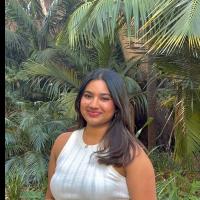
Malavika Menon
Graduate - Paraplanning, Perpetual Wealth Management
Bachelor of Commerce (Finance & Economics)
A day in my life as a Graduate at Perpetual Wealth Management
5:00 AM
I wake up around 5:00 am (which is torture on some days) to go to the gym. After the session I come home, get a quick bite to eat and get ready for the day. I catch the metro into the city and get off at Martin place (only a 5 minute walk to the office!).
8:45 AM
I usually aim to get to the office before 9, then greet my team and have a look at my calendar and any emails I may have.
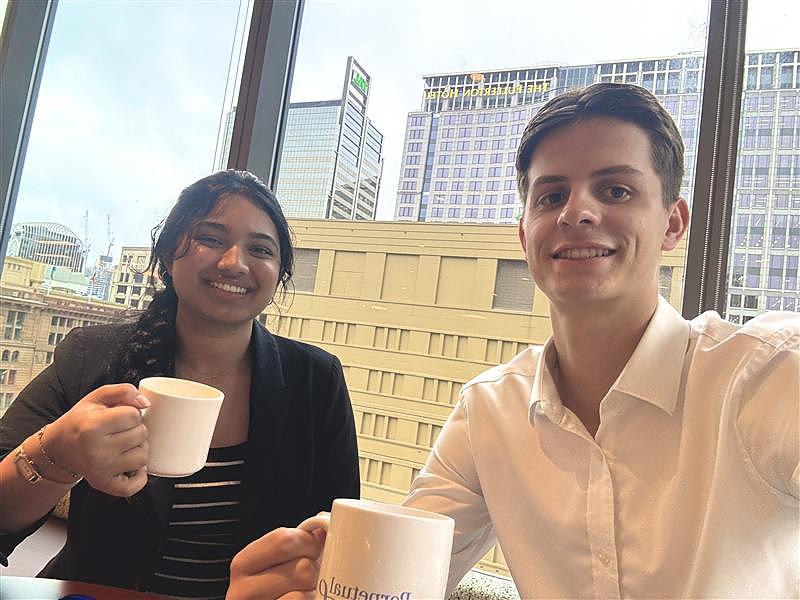
9:00 AM
Every Thursday the graduate cohort goes for coffee, which is a great way to start the day and connect with everyone. As everyone has different schedules its nice to dedicate some time during the week where we can meet up and pay for overpriced coffee. However, since it was raining we decided to stay in and make the most out of our coffee machine.
9:30 AM
As a graduate in the paraplanning stream, a big part of my role involves drafting financial advice documents and making sure the strategies recommended genuinely align with the client’s best interests. I usually have around 6-7 documents in my queue, so I aim to work through at least one a day. To help manage my workload, I’ve created an Excel workflow tracker that ranks each document by urgency. It’s been really helpful in keeping me on track with my KPIs and ensuring all work is delivered on time.
11:00 AM
Today we had a training session on writing Advisory Record of Advice (RoA) documents. I really enjoy these sessions as they’re a good way to build confidence when dealing with more complex advice and to better understand how to approach different scenarios. It’s also nice being able to connect with the Melbourne graduates, even if it’s just virtually.
12:00 PM
I usually go to lunch with the fellow graduates, where I aim to get out of the office and go on a walk around the city.
1:00 PM
After lunch, I get straight back into reviewing documents. This usually involves liaising with advisers and associates on things like asset allocation, superannuation contributions, or whether there’s a better strategy for the client. It’s a collaborative part of the role as there’s a lot of back-and-forth to make sure everything stacks up, is compliant and ultimately in the client’s best interests.
2:00 PM
Every fortnight, the paraplanning team has a team meeting. It’s a great way to connect with everyone and put a face to the name, especially since our team is spread across Australia and even includes colleagues in the Philippines. We usually cover any process updates, check in on how everyone’s tracking, and raise any issues or questions as a team, so it’s a useful way to stay aligned and connected.
3:00 PM
Afternoons usually involve submitting documents for peer review and working through any remaining tasks. I also use this time to complete any outstanding training modules and stay up to date. Where I can, I like to step out for a quick walk around the block and of course grab another coffee.
5:15 PM
I wrap up the day by making sure everything is up to date and on track, then say goodbye to the team before heading home.
6:00 PM
As soon as I get home, I usually have dinner and take some time to recharge. Since I’m also doing my Master’s, I try to set aside around 1–2 hours each evening to stay on top of my study. I always leave time to just relax and scroll in bed and mentally prepare for the next day.
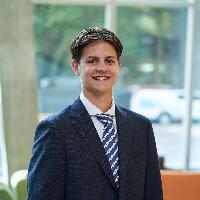
Joshua Sheather
Graduate - Paraplanning, Perpetual Wealth Management
Bachelor of Accounting and Finance
What's your job about?
I am a graduate at Perpetual Wealth Management (PWM), specifically within the paraplanning team. My role as a graduate paraplanner heavily involves supporting financial advisers by analysing client information, assessing strategies and the breakdown of assets and asset classes within portfolios and completing compliant advice documents, which at this stage is mainly Records of Advice.
Within Records of Advice, graduates like me are also tasked with doing strategy modelling for clients such as running projections for retirement and cash flow scenarios. As well as completing portfolio rebalances if a client’s portfolio is not in line with their target asset allocation. Doing this type of work requires a high level of accuracy and attention to detail, which is especially important in such a regulated industry.
Through doing all this, it helps to build technical, theoretical and regulatory knowledge needed to progress toward becoming a financial adviser.
What's your background?
I grew up on the Northern Beaches of Sydney and have lived there my entire life. In high school, the subjects I enjoyed most were business studies and economics. So, after finishing high school, I applied for a Co-Op scholarship at the University of Technology Sydney, which I was thrilled to get. It was a three-year accounting degree (sub-majored in Finance) and through this scholarship, I was fortunate to get to work two 6-month internships at a sponsoring company. One of my internships was at Westpac within the Mergers & Acquisitions team and my other internship was at Perpetual, within the Financial Control team. Not only was I grateful to have some quality work experience, but I also spent 6 months overseas on exchange in Prague. This experience was honestly the best decision I have ever made. I built independence, travelled all across Europe and met so many great people, making it totally worth it!
Throughout my internship at Perpetual, I reached out to many people across the business. One of those was a financial advisor, and after catching up and learning about what financial advisors do, it got me hooked and motivated, and ever since that conversation, I was passionate about re-joining Perpetual in the Wealth Management business after graduating university. Subsequently, in my final year at university I applied for a graduate role and after the recruitment process, I was ecstatic about being offered a job!
What's the coolest thing about your job?
What I love most about working at Perpetual as a graduate is how flat the organizational structure is. Despite being a graduate, I feel genuinely comfortable reaching out with questions, without any sense of pressure or imposter syndrome. They consistently take the time to listen thoughtfully, and offer considered, practical answers, which has been incredibly reassuring early in my career. This culture of accessibility not only supports my professional development but also reinforces a strong sense of belonging and confidence, making it easier to learn, grow, and contribute meaningfully within the organisation.
What are the limitations of your job?
Being a graduate paraplanner has various limitations, as the role typically offers limited autonomy and almost no client interaction, which can make it challenging to see the full impact of your work. Most responsibilities focus on execution rather than strategy, with key decisions made by advisers, which sometimes makes the work feel restrictive. Much of the work can be process‑heavy and repetitive, particularly in document preparation and data entry. Additionally, the strong compliance focus can feel overwhelming early on, and career progression may feel gradual, requiring patience while developing competence and confidence before moving into more strategic or client‑facing roles.
3 pieces of advice for yourself when you were a student...
If I could give my past student self some advice, it would be:
- Stop stressing about having everything figured out so early — most people are learning as they go.
- Say yes to more opportunities, even if you don’t feel ready, because that’s how you build confidence and skills.
- Don’t be afraid to ask questions or lean on other people – being curious will help you far more than trying to do everything alone.
Lara Maybery
Graduate - Paraplanning, Perpetual Wealth Management
Bachelor of International Studies and Commerce
What's your job about?
Working at Perpetual in the Paraplanning team, my role is to provide technical expertise for financial advisers.
I write Records of Advice, which are annual documents we provide to clients to update them on their investments they hold with us, including their performance and asset allocation. I do things like modelling strategies, recommending trades to keep accounts in line with our investment models, and ensuring our advice is accurate and compliant.
I work closely with advisors and their associates to rebalance accounts to the client’s agreed risk profile and implement recent changes from our investment research team. As paraplanners we also ensure that recommendations that are made align with the client’s goals and also regulatory requirements.
What's your background?
I grew up in Horsham, a small town in Western Victoria. After high school I moved to Geelong to study at Deakin University. During this time I worked in agriculture over the summers at a grain company and spent some time working in retail. Also, during university, I studied abroad for 6 months, at the University of British Columbia in Vancouver, Canada.
I got my job at Perpetual Wealth Management through applying online. I had never heard of Perpetual and did not know what paraplanning was, but I had a good interview experience and felt the graduate program offered me a great opportunity to learn and be challenged, so thought I would give it a try and see where it took me. I was afraid that the fact I had no prior experience in the finance industry would limit my chances at getting a role, but I think my diverse background gave me a lot of skills that I could transfer into my job as a paraplanning graduate.
I have now been working at Perpetual for four months, and I felt like I have learned more in this time than ever before, and I believe that being a graduate at Perpetual is helping me build a strong career foundation.
What's the coolest thing about your job?
The coolest thing about my job is getting the opportunity to learn every part of the business and talk to colleagues at every level. We are a high production team and produce a lot of advice documents, but the comprehensive understanding of wealth management and relationships with advisors and associates I have developed through this process so far has meant I have been able to build skills at a fast pace. It’s rewarding to know my work contributes to the bigger picture for clients, and it has given me confidence that I’m developing the right skills to add value over time.
What are the limitations of your job?
The main limitations of my role currently is that we do not have any interactions with clients, as our work is mainly back-end tasks. However, as a graduate you do get the opportunity to build relationships that could lead you to a more client-facing role in the future.
Also, because we have a strong focus on compliance and technical skills, the work can be overwhelming at the start and the learning curve is quite steep, but everyone is very supportive and prepared to help at every step along the way.
3 pieces of advice for yourself when you were a student...
- Take every opportunity you are given and make your best effort, even if you are scared.
- Learning anything new or different will always come with challenges, lean on those around you and remember to be kind to yourself, even when it seems difficult.
- Remember to slow down and have fun!
Lilly Dean
Graduate - Perpetual Corporate Trust
Bachelor of Commerce
What's your job about?
I have started in the Sales Team, where the majority of my time is spent working with Perpetual Digital (an arm of Perpetual Corporate Trust) on the Fixed Income Intelligence product. Broadly, the Sales Team is responsible for driving revenue through promoting and (as the name suggests) selling Perpetual Corporate Trust’s products. A lot of what the team does revolves around managing ongoing relationships, pitching and delivering solutions to meet client needs, and negotiating deals. As you would have gathered, the team is highly relationship focussed, but a common misconception is that this is just externally. In addition to maintaining relationships with clients, we are fortunate enough to work closely with many internal teams – such as marketing, product, middle office, etc. – to ensure client satisfaction and get projects across the line. Part of ensuring client satisfaction is tracking performance metrics and hitting targets. One of my roles is generating monthly reports for the team or clients to track our performance and assess whether we are effectively delivering value. For the most part, my work differs every day, however typically, my day consists of grabbing coffee with colleagues, attending internal and/ or external meetings, working away at my projects, and liaising with clients.
What's your background?
I grew up on a farm north of Wagga Wagga but headed off to Boarding School in Sydney from Year 7. Throughout school, I loved all things Maths and PE and worked every holiday back on the family farm. After graduating in 2021 and working a very long harvest, I headed straight to uni where I studied and lived on campus at the University of Sydney. After three short years, I completed my Bachelor of Commerce and in my final year of uni, got an internship at an accounting firm where I worked two days a week. I was also lucky enough to head overseas in my final year of uni for the first time, where I did a typical Euro Summer trip (along with half of Australia it seemed!) and had the best time. I now share-house with three of my closest friends from uni and have been at Perpetual for four months. I still try to get back home as much as I can (mainly to see our sausage dogs!) but I am lucky enough to have built a strong community up here in Sydney from school, uni, sport – and now, Perpetual.
Could someone with a different background do your job?
Yes, absolutely! This will sound clichéd, but truly, everyone in our team has such different backgrounds. It is one of the reasons I have enjoyed coming to work and getting to know everyone so much; it is refreshing to be surrounded by such interesting people who are genuinely interested in you as well. Despite our different upbringings, everyone in my team is enthusiastic and hard working (and luckily for me, always up for a laugh!).
What's the coolest thing about your job?
Because my team is client facing, I have loved being able to attend client meetings and events. As a bit of a chatter box and someone who is new to the industry, I have really enjoyed meeting external people in the industry, hearing their stories and sitting in on high-level conversations. As a result, my favourite projects often revolve around completing tasks for clients because it means I get to work with them to achieve a common goal whilst learning more about the industry along the way.
What are the limitations of your job?
This is probably a universal graduate experience, but starting a fulltime job has been quite the steep learning curve! Despite starting to find my feet, I still feel like I am trying to learn everything – from technical skills to client etiquette and everything in between – all at once. Understandably, this is just part of the fun, but it can be exhausting and is something to be prepared for when you take on your first fulltime job.
3 pieces of advice for yourself when you were a student...
- Go with your gut – back yourself and trust your intuition.
- Have a crack – say ‘yes’, be open-minded, get ambitious and work hard.
- It’s not that deep – don’t overthink it, have fun and try again tomorrow.
Isani Cummins
Graduate - Perpetual Corporate Trust
Bachelor of Laws and Bachelor of Commerce (International Business)
Day in the life:
7:30 AM
I wake up around 7:30 and get ready for the day. After a quick breakfast (or a trusty muesli bar), I catch the bus into the city. I use the time to listen to a podcast or just mentally prepare for the day ahead.
8:50 AM
I arrive at the office just before 9. After greeting my team, I start by checking my emails and calendar. I sort through any urgent requests, set my agenda, and knock out a few quick admin tasks – things like filing, updating notes, or preparing regulatory applications. It’s a good way to set up for the day.
10 AM
I take a short walk with some of my team to grab coffee. It’s a great chance to get some fresh air, catch up with colleagues, and chat about what everyone’s working on. These informal check-ins help to build a strong team culture.
10:15 AM
Today’s first meeting is with an asset finance client to discuss amendments to one of their warehouse trusts. People from other teams at Perpetual also join the call. It’s always valuable to hear how other teams explain complex concepts to clients – it helps me build my own understanding and confidence.
11:00 AM
Next is our weekly pod meeting, and every second week we meet with the broader team. We share updates, discuss challenges, and reflect on what we’ve recently learned. Hearing about others’ experiences helps me anticipate similar challenges in my own work.
11:30 AM
I spend time reviewing proposed amendments and associated documents from clients. These can involve commercial changes, regulatory updates, or material shifts in our obligations as Trustee/Trust Manager. No two amendments are the same, so I’m constantly learning.
12:00 PM
Around midday, I take a lunch break. Sometimes I’ll eat out with colleagues, other times I’ll go for a solo walk. Our building offers wellness classes like Pilates, yoga, and ABT, which I love to go to (when I can get a spot!).
1:00 PM
This afternoon, I’m reviewing transaction documents for a new $1 billion trust issuance by a non-bank lender. The drafting lawyers have requested comments by end of day, so I prioritise this task while managing incoming emails or requests.
3:00 PM
Once a week, I have a one-on-one with my manager. We discuss how I’m tracking, any roadblocks I’m facing, and areas for development. It’s a great opportunity to get feedback and stay aligned on goals.
3:45 PM
By mid-afternoon, I’m usually craving a sweet treat – so I head out for another quick walk with fellow grads. It’s a nice way to check in with each other, share how our days are going, and support one another through the grad journey.
4:00 PM
I join another client meeting, this time to discuss a commercial agreement between them and Perpetual. After the meeting, I draft a revised version of the document based on their feedback and send it through for their review.
5:00 PM
I wrap up the day by clearing my inbox, finishing off admin tasks, and preparing for tomorrow. I like to leave the office with a clean slate, heading home when I’ve finished all urgent tasks.
6:00 PM
Evenings vary! Sometimes I’ll head to an industry networking event or catch up with my grad cohort for activities like Holey Moley, gelato runs, or Korean BBQ. Other nights I’ll play Oztag, do a Pilates class, or just relax at home with a good show.